



Content Summary
Almost none formally evaluate whether the executive team as a whole is built for the strategy the company is actually pursuing right now.
That's the governance gap that this article addresses — and it's more expensive than most boards realize.
McKinsey research is clear: companies whose top executive teams are aligned and working effectively together are nearly twice as likely to achieve above-median financial performance. Yet a Center For Creative Leadership survey found only 18% of senior executives rate their own executive team as "very effective" in carrying out its responsibilities.
The gap between those two data points is where deal value erodes, strategic pivots stall, and capable leaders quietly disengage.
The skills that were exactly right for the last phase of the business can be structurally wrong for the next one. CEOs rarely raise this directly — it implicates people they've built the business with. Which is precisely why boards need to.
As Michael Porter wrote: "Strategy is about making choices, trade-offs; it's about deliberately choosing to be different." The composition of your executive team is one of those choices — whether you make it consciously or not.
This covers what a rigorous executive team composition review actually looks like, which moments in a company's trajectory make it most necessary, and what happens when boards wait too long to ask the question.
https://www.aspirations-group.com/post/the-executive-team-composition-problem-nobody-discusses-in-the-boardroom
Access this content
Choose an option below
Your content has been opened.
Register to access this content
Verify your email to access this content
Code sent. Enter it in the modal
Your content has been opened.
Why do I need to verify I’m human?
Please verify you are a human before opening this content.
Your content has been opened.
The content will open in a new window. You may need to allow popups for this site.
Check your inbox
The Executive Team Composition Problem Nobody Discusses in the Boardroom has been emailed to . Entered the wrong email?
Don't see the content in your inbox?
Make sure to check your spam and other messages folders.
Can't get to your email right now?
By accessing content on the SHRM Human Resource Vendor Directory you agree to our Terms of Service and Privacy Policy; and, you acknowledge that your information may be shared with the content publisher.
You might also be interested in
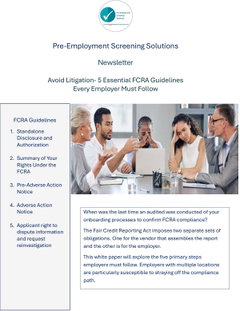
Avoid Litigation- 5 Essential FCRA Guidelines Every Employer Must Follow
When did you last audit your onboarding workflow for FCRA compliance? The Fair Credit Reporting Act holds employers to strict obligations. Multi-location companies are...
Read More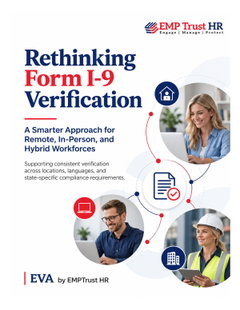
Rethinking Form I-9 Verification: A Smarter Approach for Remote, In-Person, and Hybrid Workforces
Explore how EMPTrust HR helps organizations simplify Form I-9 verification across remote, in-person, and hybrid workforces. This eBook highlights how EVA, multilingual onboarding...
Read More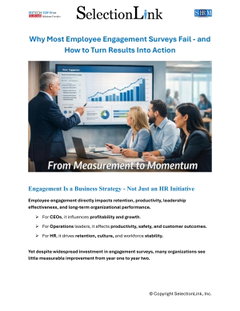
Why Most Employee Engagement Surveys Fail – and How to Turn Results Into Action
Discover how a confidential, full-service, third-party employee engagement survey partner can help your organization turn feedback into measurable results.
Read More









