



Content Summary
I have sat in executive meetings where senior leaders believed they had a clear picture of the business. The dashboards looked healthy. The presentations were polished. Then the numbers collapsed two quarters later and everyone acted surprised.
They should not have been.
The warning signs were already there. Frontline employees had seen them. Customers had changed their behavior weeks earlier. The information existed — it just never reached the top in a form anyone could act on.
That's information distortion. And it's not a data problem. It's an architectural and behavioral problem that most organizations never directly confront.
More than 85% of employees have withheld important information at some point because they feared the consequences. The 2025 Edelman Trust Barometer found that global trust in employers fell for the first time since 2021. And the 2024 PwC Global Crisis and Resilience Survey confirmed that the difference between organizations that recover quickly from disruption and those that don't comes down to one thing — how fast bad news travels upward.
Richard Feynman said it best in his personal appendix to the Rogers Commission Report after the Challenger disaster: "For a successful technology, reality must take precedence over public relations, for nature cannot be fooled."
The same is true for every organization operating on curated data.
This article breaks down what information distortion costs, why it persists, and what the executives who consistently stay close to operational reality do differently.
Access this content
Choose an option below
Your content has been opened.
Register to access this content
Verify your email to access this content
Code sent. Enter it in the modal
Your content has been opened.
Why do I need to verify I’m human?
Please verify you are a human before opening this content.
Your content has been opened.
The content will open in a new window. You may need to allow popups for this site.
Check your inbox
The Leader Who Doesn't Know — How Information Distortion Creates Executive Blind Spots has been emailed to . Entered the wrong email?
Don't see the content in your inbox?
Make sure to check your spam and other messages folders.
Can't get to your email right now?
By accessing content on the SHRM Human Resource Vendor Directory you agree to our Terms of Service and Privacy Policy; and, you acknowledge that your information may be shared with the content publisher.
You might also be interested in
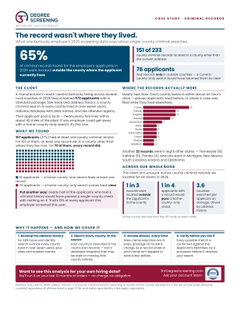
You might want to reconsider conducting a "Single County" / "Current County Only" background check.
We analyzed a full year of screening data for a Kentucky manufacturer. Rural area, local workforce, most hires live within 40 miles of the plant. If any employer could get away...
Read More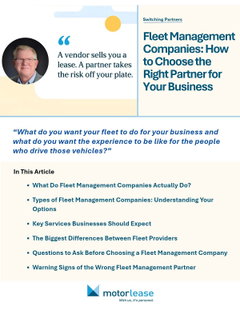
Because fleet may be about vehicles, but the right fleet experience is about people.
If your company is considering a fleet management provider, where do you start? Rates? Technology? The services included? Joe Pelehach, Chief Commercial Officer at Motorlease,...
Read More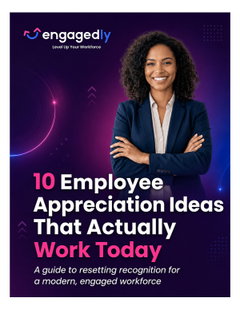
10 Employee Appreciation Ideas That Actually Work Today
This practical playbook shows how to reduce burnout, engage deskless and frontline employees, and make recognition visible, inclusive, and meaningful across the workforce. What...
Read More









