


Content Summary
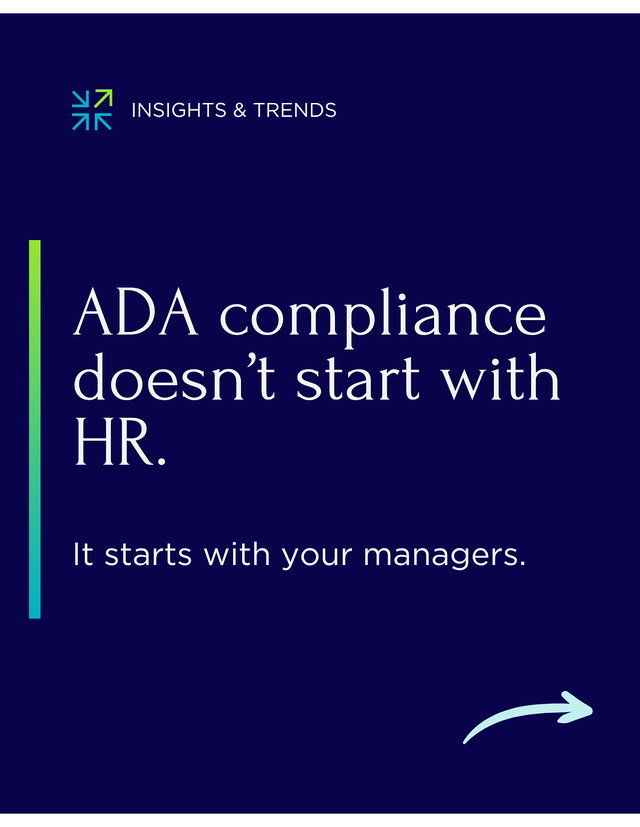
An employee mentions they’re struggling with a medical condition. A team member asks for flexibility after a doctor’s appointment. A high performer begins having attendance issues tied to a health concern. In most cases, the first person they talk to isn’t HR. It’s their supervisor.
What happens next can determine whether the organization begins a compliant accommodation process or creates unnecessary legal risk.
As accommodation requests continue to rise and disability-related claims remain a top enforcement priority for the Equal Employment Opportunity Commission (EEOC), organizations are realizing that ADA compliance is no longer just an HR responsibility. It is a manager responsibility.
The managers who know how to recognize potential accommodation situations, respond appropriately, and involve the right people can help protect employees, strengthen workplace culture, and reduce organizational risk. The managers who don’t may unintentionally create problems before HR ever has a chance to help.
Access this content
Choose an option below
Your content has been opened.
Register to access this content
Verify your email to access this content
Code sent. Enter it in the modal
Your content has been opened.
Why do I need to verify I’m human?
Please verify you are a human before opening this content.
Your content has been opened.
The content will open in a new window. You may need to allow popups for this site.
Check your inbox
Why ADA Compliance Starts With Managers, Not HR has been emailed to . Entered the wrong email?
Don't see the content in your inbox?
Make sure to check your spam and other messages folders.
Can't get to your email right now?
By accessing content on the SHRM Human Resource Vendor Directory you agree to our Terms of Service and Privacy Policy; and, you acknowledge that your information may be shared with the content publisher.
You might also be interested in

SHIFT HR Compliance Update - September 2026
Managers have always been the first line of compliance. Many workplace compliance issues take shape before HR ever becomes involved. Managers are often the first to hear about a...
Read More
Manager Readiness Assessment
Turn what’s ahead for your business into a plan for manager readiness. Your business plan is already giving you a view into what your managers will be asked to do next. Growth....
Read More
SHIFT HR Compliance Update - August 2026
Employers have always been expected to respond appropriately when workplace issues arise. Increasingly, however, regulators are looking beyond the actions organizations take after...
Read More









